
High Birth-Rate Phenomenon
A new global realization

There was this concept popularized in the last few years of the “Zero Interest Rate Phenomenon”. The notion that many unsustainable systems were built up during period of low interest rates, which now that rates have gone up and there is a risk-free value to capital, these structures are collapsing in on themselves or fading away.
Things like gambling on meme-stocks, people taking out tons of mortgages to build a speculative AirBnB portfolio, startups being allowed to raise at higher and higher valuations without making any money, companies bloating with hiring sprees of people who barely do any work. Once the tides shifted, many crazy things that were not on sound footing smashed back to Earth.
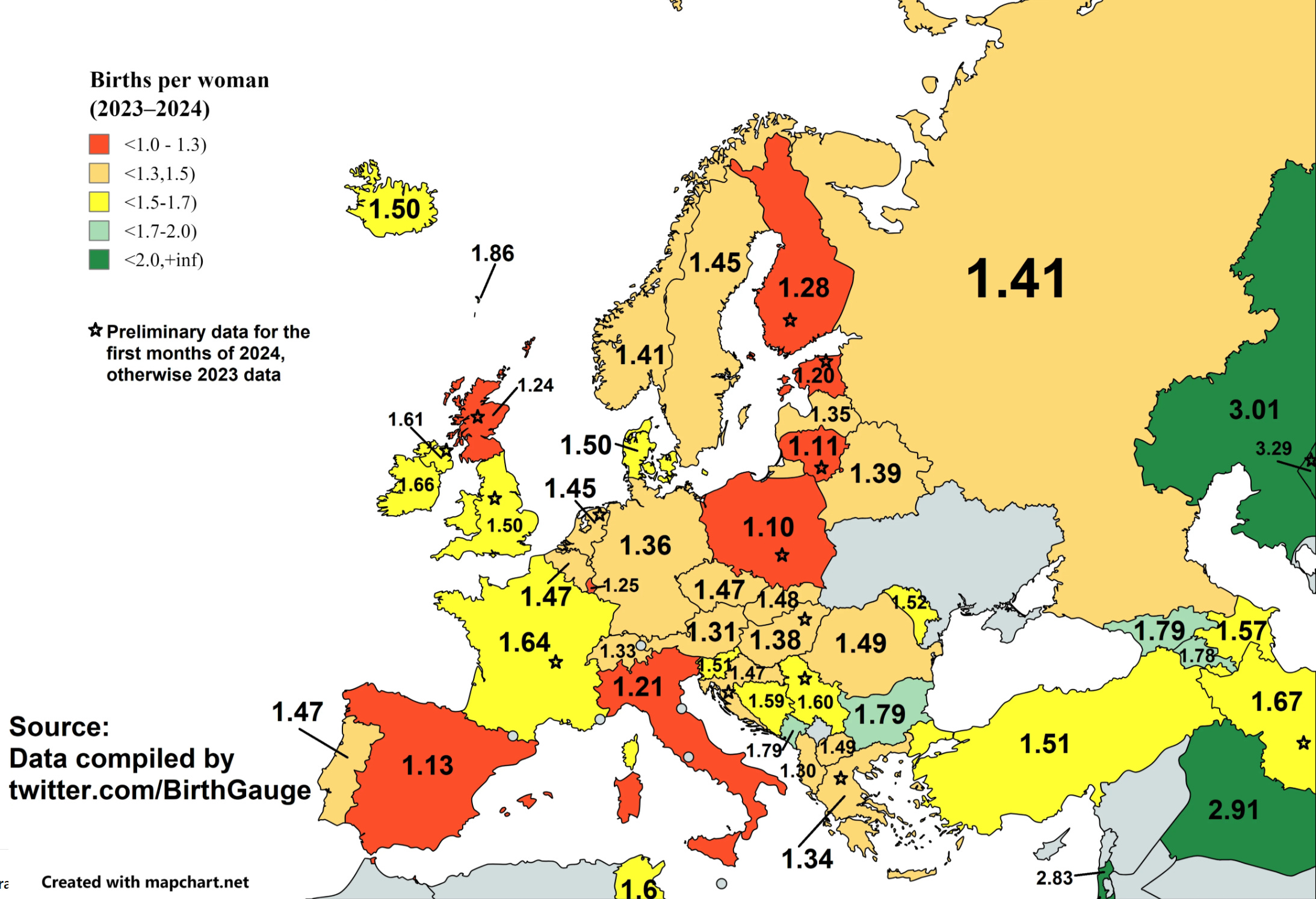
The next global mega-trend I think we will see as societies age and birth rates in all the developed world plummet to record lows is the idea of a “High Birth-Rate Phenomenon”.
It’s characterized by systems, elements of culture, and ways of life that were only possible in a society where the youth greatly outnumbered the elderly. Cracks in areas thought to be robust will begin to show in a world where we don’t have an abundant supply of young people.
Low Wage Part-Time jobs being staffed by local youths
It seems every boomer you talk to can romantically wax on about the series of odd-jobs and part-time gigs they worked in their younger days. Somehow they all have a similar story of being able to afford their first car by picking up an after-school paper route.
When you had such a large amount of young people in proportion to the rest of the population, businesses could rely on high-school kids to help to do jobs. There were enough willing bodies around that they didn’t need to lobby for cheap foreign labor to keep profit margins intact.
It was also probably more enjoyable for kids to work at McDonald’s when the store was mostly staffed by other neighborhood peers instead of foreigners in their 40s taking the gig to maintain a work visa.
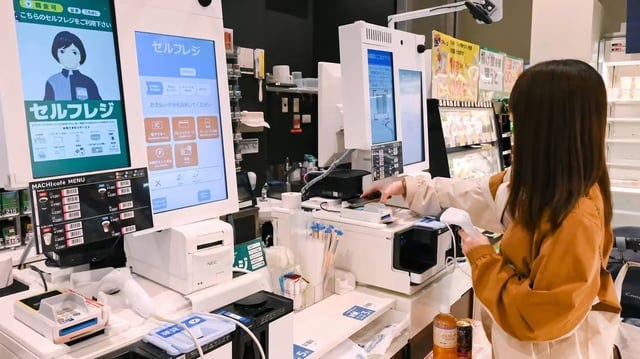
In Japan, ground zero for the birth collapse, more and more convenience stores are no longer operating 24-hours a day. Last year Japan only recorded 670,000 new births. With over 55,000 konbini in the country there’s simply not going to be enough people to staff these stores for the overnight shift. A job once filled by university students is now increasingly handled by migrant workers or automated solutions to reduce staff. Immigration-restrictionist Japan is begrudgingly realizing that their beloved konbini’s in the form that they knew them, were something of a High Birth-Rate Phenomenon.
Businesses Catering to Kids

Unsurprisingly, when society was filled with youths, a lot of money was made catering to youths. This has changed. Sadly, it won’t be reverse-engineered by building Chuck E. Cheese’s, that was downstream of the baby boom.
I would not want to be in any sort of business right now where the end consumer is a child. Toys, play-places, educational materials, youth clothing etc. Year after year you have to fight for a piece of a shrinking pie of potential customers.
Lucrative Pension Schemes
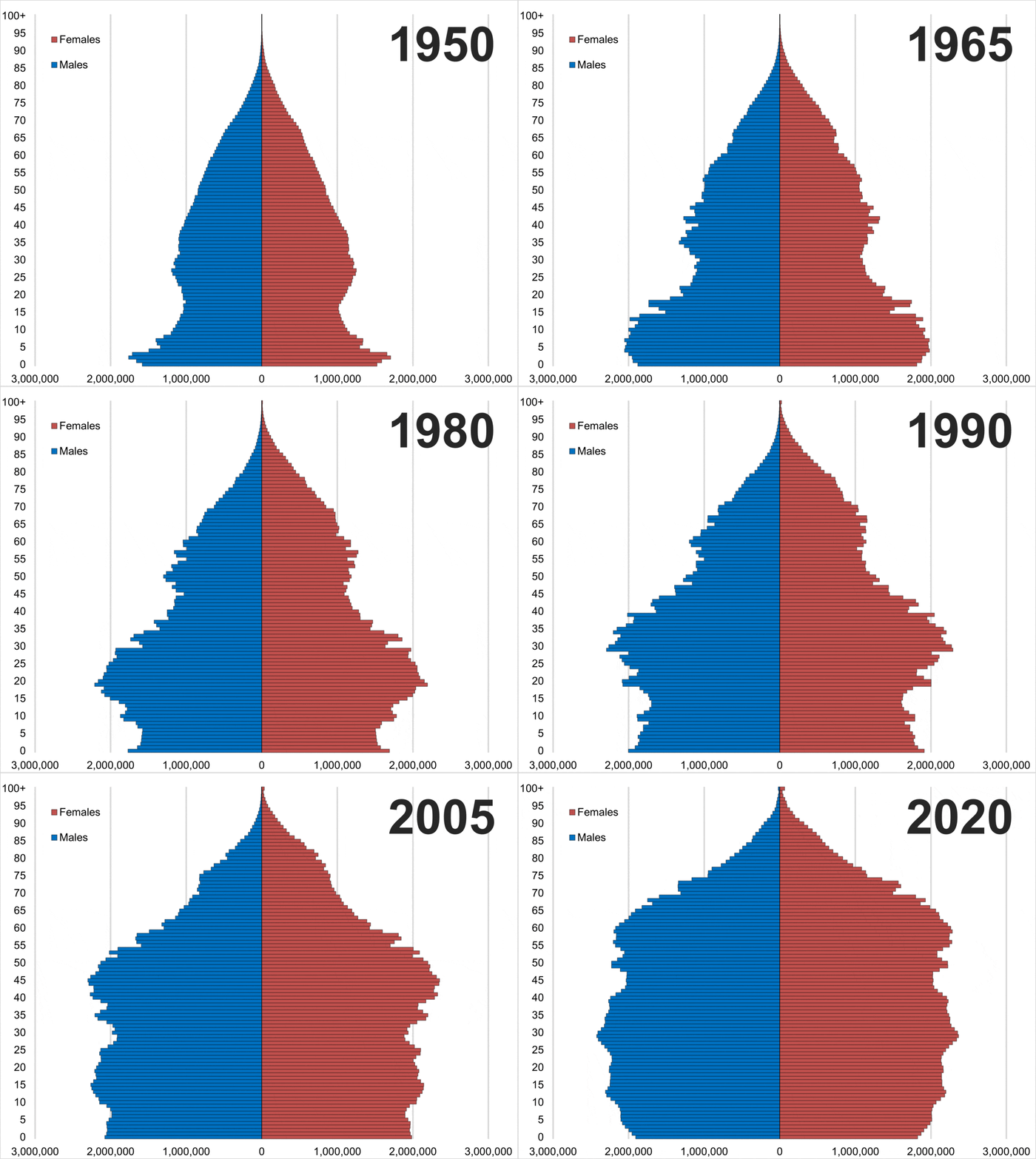
I’m not saying Social Security is a Pyramid Scheme, but it does require a nice well-formed population pyramid to operate effectively. You want a much larger number of youth contributing to the system than elderly taking out of it.
All pension systems run into problems when this structure inverts, The trouble is also being exacerbated as lifespans increase and people keep collecting checks for decades after they retire.
Corporations largely realized this issue about 30 years ago and started phasing out the generous retirement compensation plans in favor for 401(k)s . Only the public pension system remains widespread and destined for some form of collapse/bailout.
Public Optimism
I think this point is both a cause and effect of low-birth rates. A sclerotic society is going to be inherently less optimistic than one where half the population is in their mid-20s or younger. That youthful foolishness and belief in “anything being possible” is beaten out of the zeitgeist when the median age is 51. The whole hippie movement in America was the product of a massive of baby-boomer youth run wild. What you hope is left in an elder society is at least some extra wisdom and practicality as a virtue of more life experience.
Is a more pessimistic society conducive to having children though? Here is where you can get into the Aging Doomer Loop. Which goes something like the following…
The future of society looks bleak because of low-birth rates —> Young person questions whether they want to birth a being into this world —> They don’t have kids, driving the birth rates lower —> The future of the society looks bleak because of low-birth rates … (ad infinitum)
This sort of mental aspect of the birthing question would be less of a problem in older times when having children was more of a necessity or something that “just happened” than a calculated choice.
We’ve seen places like South Korea and Hungary attempt tackle their low-TFR with monetary policy initiatives. The success of these methods has so far been pretty lukewarm. Both countries are still well below replacement level. It turns out you can’t just pay people a few extra grand and expect them to have more babies.
Nobody has been able to correctly diagnose the core of the issue yet, but I think the solution probably lies more in fixing the mindset around having kids than with explicit material matters.
We saw this during COVID when people foolishly predicted a baby boom because people were stuck at home with nothing to do but boink. What happened was the opposite. When you’re in a pandemic and think society might implode most people don’t rush to have a newborn child.
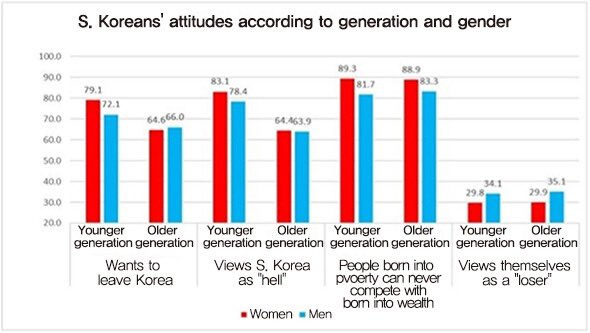
Take South Korea as another example, where nearly 80% of the younger generation view the country as “hell”. It’s not particularly surprising that the birth rates there are the lowest in the world. You must build a world with a bright future to have people believe in tethering their bloodlines to that future.
Lindy, thank you for sharing your insights into how lower birth rates are affecting economies. I am 70, we have 3 adult children. 2 are in their 30s in committed relationships, but don’t want children. Too much uncertainty in their opinion. My first job in high school I worked in an ice cream parlor. I started at $1.25 per hour.